
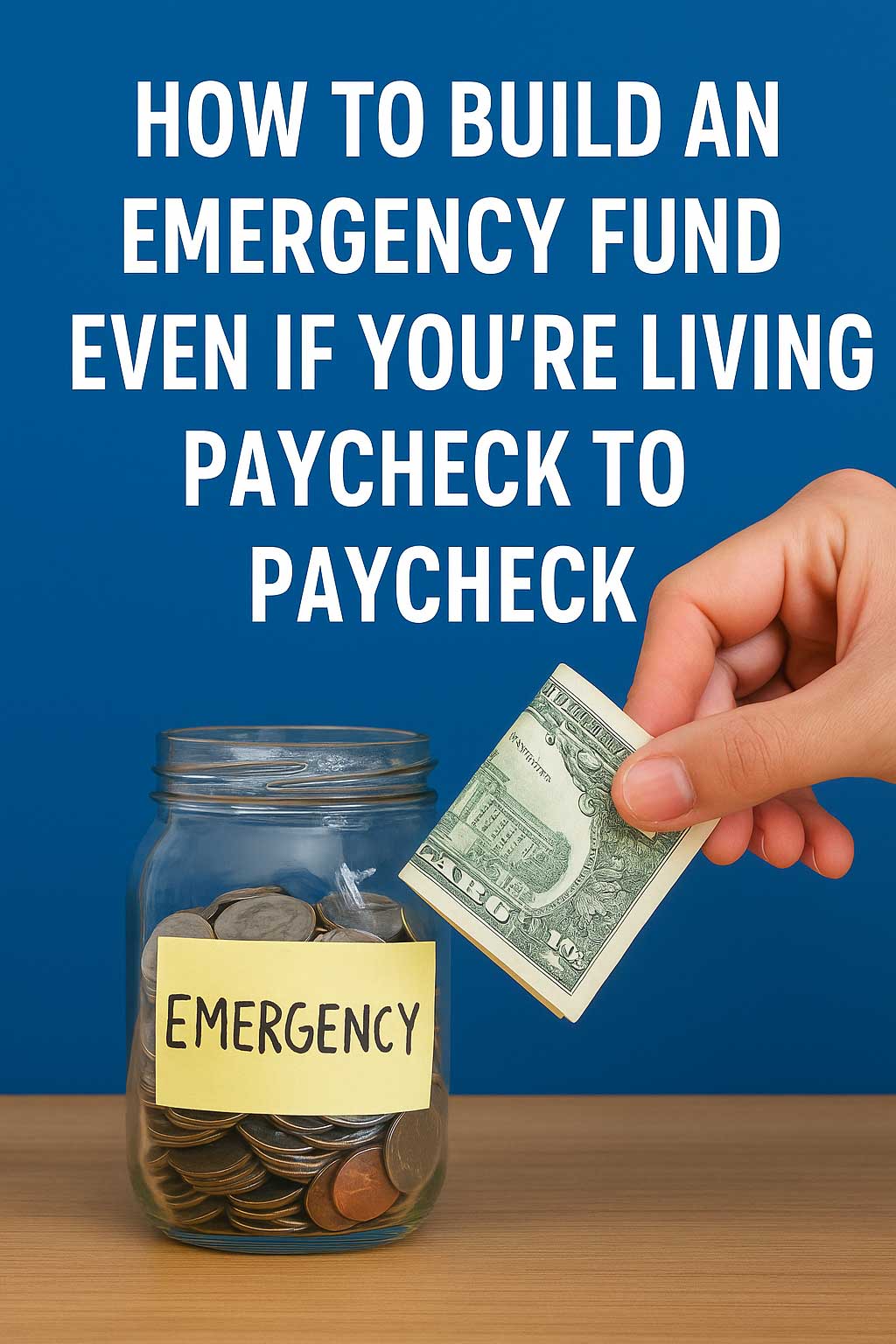
Introduction
If you are living paycheck to paycheck, the idea of saving money can feel almost impossible. Bills, debt payments, groceries, rent, and daily costs seem to swallow every last bit of your income. When someone says, “You should build an emergency fund,” it might sound unrealistic, like advice for people who already have extra money lying around.
But here is the truth:
An emergency fund is not only for people who are already comfortable. It is especially important for people who are living paycheck to paycheck.
The good news is that you do not need to be rich or perfect with money to build one. You do not need to save huge amounts at once. You do not even need to “feel ready.” You only need a simple plan, a clear reason why it matters, and a way to save small amounts consistently.
This article will walk you through, step by step, how to build an emergency fund even if you feel like there is nothing left to save. We will go deep into mindset, practical strategies, daily habits, and realistic ways to find and protect small amounts of money until they quietly grow into real financial security.
1. What Is an Emergency Fund and Why Do You Need One?
An emergency fund is a separate pool of money set aside for true emergencies—unexpected events that would otherwise force you into more debt, stress, or financial chaos. It is not for vacations, shopping, or “I just feel like buying something.” It is your financial safety net.
1.1 What counts as an emergency?
Emergencies typically include:
- Sudden job loss or reduced working hours
- Medical bills not fully covered by insurance
- Emergency home repairs (broken pipes, serious leaks, electrical issues)
- Car repairs needed to keep your car safe and drivable
- Unexpected travel due to family emergencies
- Essential bills that you cannot cover due to sudden income disruption
Non-emergencies include:
- New phone because you are bored of your current one
- Flash sales and limited-time offers
- Eating out because you do not feel like cooking
- Upgrades that are nice to have but not truly necessary
Your emergency fund exists to protect essentials: housing, food, health, transportation, and basic stability.
1.2 Why an emergency fund matters even more when you are broke
If you already have money, an unexpected expense is annoying, but manageable. You adjust your budget, move some funds around, and keep going.
If you are living paycheck to paycheck, an unexpected expense can be a disaster.
Without an emergency fund, a single problem can:
- Push you into high-interest debt (credit cards, payday loans)
- Cause you to miss rent or bill payments
- Increase bank fees from overdrafts
- Add stress, fights, and sleepless nights
- Trigger a cycle where each emergency creates more debt, and each debt creates more emergencies
Building an emergency fund helps break that cycle. It gives you breathing room. It turns a crisis into an inconvenience instead of a catastrophe.
2. Let Go of the All-or-Nothing Mindset
Many people fail to save because they think too big at the start.
You may have heard “you need 3–6 months of expenses saved.” That can be great long-term advice, but if you are living paycheck to paycheck, it might sound impossible and discouraging. When a goal feels too far away, your brain quietly decides not to even try.
2.1 Start with a small, reachable goal
Instead of aiming for thousands immediately, start with a smaller, powerful target. For example:
- First goal: 50
- Then: 100
- Then: 250
- Then: 500
- Eventually: 1,000 and beyond
When you choose a smaller, realistic starting point, something important happens: you experience a win. That win gives you confidence and momentum. You prove to yourself that saving is possible, even in small amounts.
2.2 Progress is more important than perfection
You will have months where saving feels easy and months where everything goes wrong. That is normal.
You might:
- Save 40 one month, then only 10 the next
- Need to use some of the emergency fund, then rebuild it
- Miss your planned savings transfer because of an unexpected bill
Do not use those moments as proof that you “cannot save.” Instead, see them as part of the process. Real progress is messy, imperfect, and full of adjustments.
Your job is not to be perfect. Your job is to keep going.
2.3 Stop comparing your journey to others
You might see other people online posting about saving thousands in a few months. That can make your 20 or 50 feel small, but it is not small for you. It is meaningful.
Your income, expenses, responsibilities, and opportunities are unique. Your emergency fund is not a competition. It is personal protection for your life. Focus on your situation and your progress.
3. Know Your Numbers: Understanding Your Current Situation
Before you can build an emergency fund, you need to know where your money is going. Most people who live paycheck to paycheck do not have a detailed picture of their spending. They are not lazy or irresponsible. They are often overwhelmed, busy, or simply never taught how to track money clearly.
3.1 Track every expense for at least 30 days
For one full month, track every single expense. This includes:
- Rent or mortgage
- Utilities (electricity, water, gas, internet)
- Groceries
- Transportation (gas, public transit, ride-shares)
- Debt payments
- Subscriptions and memberships
- Eating out and coffee
- Online shopping
- Small daily purchases (snacks, drinks, convenience store items)
You can track using:
- A notebook and pen
- A simple spreadsheet
- A budgeting app
- Notes on your phone
What matters is not the tool, but consistency. Every time money leaves your account or your wallet, write it down.
At the end of 30 days, your goal is to see clearly:
- Where your money actually goes
- How much goes to essentials
- How much goes to non-essentials or low-value spending
3.2 Separate needs from wants
Next, divide your spending into two main categories:
Needs (essentials)
These are expenses you must cover to live and work safely:
- Rent or housing costs
- Basic groceries (not luxury items or constant takeout)
- Utilities
- Minimum debt payments
- Necessary transportation
- Basic healthcare
Wants (non-essentials)
These are enjoyable but not strictly required for survival:
- Eating out regularly
- Streaming services and multiple subscriptions
- Brand-name or premium versions of items
- Online impulse purchases
- Luxury beauty and grooming services
- Entertainment and hobbies
This exercise is not about judging yourself. It is about clarity. You cannot adjust what you do not see.
3.3 Calculate your realistic starting point
Once you know your average monthly income and expenses, you can estimate how much you can realistically save.
Ask yourself:
- Is there any small gap between what I earn and what I spend?
- If there is no gap, can I create one by making small cuts?
- What is the smallest amount I can commit to saving every paycheck? 5? 10? 20?
For many people living paycheck to paycheck, the first “savings number” is very small. That is okay. The goal is not to impress anyone. The goal is to start.
4. Decide on a First Emergency Fund Target
Now that you have clarity, it is time to define your first emergency fund goal. This gives your saving effort a clear purpose and finish line.
4.1 Why a starter emergency fund matters
A “starter” emergency fund is a small, fast-to-reach amount that can already make a real difference. Common starter goals include:
- 100
- 250
- 500
- 1,000
Even 100 can:
- Cover a small utility bill you accidentally missed
- Pay for a prescription
- Fix a small car issue
- Prevent an overdraft fee
500 or 1,000 can cover:
- A basic car repair
- A utility bill and part of rent in a crisis
- A plane or bus ticket for a family emergency
Having even a small amount saved changes how you feel. You no longer face every surprise completely unprotected.
4.2 How to choose your starter goal
Consider:
- Your current income
- Your average monthly expenses
- How much you think you can realistically save each month
If your budget is extremely tight, you might start with 100 or 250. If you think you can save slightly more, you might aim for 500 or 1,000 as your first major milestone.
Choose a number that feels slightly challenging but not completely impossible. Write it down somewhere you can see it: on your phone, your fridge, your notebook.
“This is my first emergency fund goal.”
4.3 Plan how long it will take
Once you have a target, estimate a realistic timeline.
For example:
- If your goal is 250, and you can save 25 per paycheck, you will reach it in 10 paychecks.
- If you are paid twice a month, that is about 5 months.
- If you can find ways to increase your savings, you will reach it faster.
Knowing the approximate timeline helps your mind understand that this is a real, achievable project, not just a vague dream.
5. Find Money in a Tight Budget: Micro-Saving Strategies
The biggest question when you are living paycheck to paycheck is: “Where can I possibly find money to save?”
The answer is rarely “cut out everything fun.” Extreme cuts usually do not last. Instead, focus on small, consistent changes that add up.
5.1 Trim non-essentials one by one
You do not need to cancel every enjoyable expense. Start small:
- Pick one subscription you rarely use and cancel it.
- Reduce eating out by just one meal or coffee per week.
- Delay non-urgent purchases for 48 hours before deciding.
For example:
- Canceling a 10 subscription saves 120 a year.
- Skipping one 5 coffee each workday saves about 100 a month.
- Reducing one 15 takeout meal per week saves about 60 per month.
You do not have to do all of these at once. Even one or two changes can create room for savings.
5.2 Switch to cheaper alternatives for daily costs
Look at where you spend frequently and ask, “Can I replace this with something cheaper without ruining my life?”
Ideas include:
- Buying store-brand groceries instead of name brands
- Cooking simple meals at home instead of frequent takeout
- Using reusable water bottles instead of constantly buying drinks
- Reducing food waste by planning meals around what you already have
- Choosing cheaper transportation options when possible
These changes do not have to be permanent. You can think of them as temporary, focused steps while you build your emergency fund.
5.3 Use “found money” to fuel your fund
“Found money” is money you were not counting on, such as:
- Tax refunds
- Work bonuses
- Cash gifts
- Small refunds from bills or purchases
- Money from selling unused items
Instead of letting this money disappear into everyday spending, direct a big portion of it to your emergency fund.
For example:
- If you receive 200 unexpectedly, decide in advance that at least 150 will go straight to your emergency fund.
Because it is not part of your regular budget, using it for savings often feels less painful.
5.4 The power of small daily savings
If you feel like you really cannot save 50 or 100 at once, focus on tiny daily amounts.
Think in terms of:
- 1 per day = about 30 per month
- 2 per day = about 60 per month
- 3 per day = about 90 per month
- 5 per day = about 150 per month
You might find 1–5 per day by:
- Bringing snacks or lunch from home
- Reducing one impulse purchase each day
- Collecting spare change and small bills in a jar
- Turning off unused lights and appliances to reduce utility costs
The key is to capture these savings immediately—move them to your emergency fund instead of letting them quietly absorb into other spending.
6. Increase Your Income, Even Slightly
Cutting expenses is one way to create room for an emergency fund. Increasing income is another powerful path, especially when you feel like you have already cut everything you can.
You do not need a huge new salary or a second full-time job. Even small income boosts can make a big difference if you direct them straight into savings.
6.1 Ask about extra hours or small raises
If your job allows it, consider:
- Asking for extra shifts or overtime
- Offering to cover busy days or less popular time slots
- Politely asking for a raise if you have taken on more responsibility
When you do earn extra, plan beforehand to send that extra amount to your emergency fund instead of letting it vanish in spending.
6.2 Use your existing skills to earn a little more
Think about your skills, hobbies, and experiences. You might be able to:
- Help neighbors or friends with childcare, pet sitting, or tutoring
- Offer basic services like cleaning, organizing, lawn care, or small repairs
- Sell handmade items or digital creations
- Assist small businesses with simple tasks such as basic online posting or errands
The goal is not to build a big business overnight. The goal is to create small, targeted bursts of extra income that flow directly into your emergency fund.
6.3 Sell items you no longer use
Most people have unused items at home that still have value. Consider selling:
- Clothes you no longer wear
- Electronics you have upgraded from
- Furniture or home items you do not need
- Hobby items you no longer use
Even if you only make 10, 30, or 50 at a time, these amounts can quickly push your emergency fund forward, especially in the early stages.
7. Automate Your Savings So You Do Not Rely on Willpower
Willpower is inconsistent. Some days you feel strong and disciplined. Other days you feel tired or stressed, and it becomes very easy to say, “I will start saving next month.”
Automation removes that decision.
7.1 Pay your emergency fund like a bill
Treat your emergency fund like a non-negotiable bill that you pay every month.
- Decide on a small fixed amount per paycheck, even if it is 10 or 20.
- Arrange an automatic transfer from your checking account to your emergency fund account on payday.
When you pay your emergency fund first, you adjust to living on what remains, instead of hoping there will be money left over.
7.2 Use separate accounts to protect your savings
If you keep your emergency fund in the same account as your daily spending, it will be very tempting to use it.
When possible, open a separate savings account with these features:
- No fees or very low fees
- Easy to transfer money in
- Slightly inconvenient to spend from impulsively (for example, no debit card directly tied to it)
The goal is to make saving easy and spending from the fund slightly more difficult, so you think carefully before touching it.
7.3 Start small, then increase gradually
You do not need to automate a big amount right away. Start with an amount that feels manageable.
For example:
- Begin with 10 per paycheck.
- After a few months, increase to 15 or 20.
- When you get a raise or reduce a major expense, increase the automatic transfer again.
This “slow increase” approach allows your lifestyle to adjust gradually and keeps the process sustainable.
8. Protect Your Emergency Fund from Yourself
One of the hardest parts of building an emergency fund while living paycheck to paycheck is resisting the urge to spend it on non-emergencies.
8.1 Define your personal rules for using the fund
Before your emergency fund reaches a large amount, decide on your personal rules. For example:
“I will only use this money for:
- True emergencies that affect housing, food, health, or essential transportation
- Job loss or major reduction in income
- Urgent bills that, if unpaid, would cause serious problems
I will not use this money for:
- Shopping, entertainment, or travel
- Regular bills that I simply forgot to plan for
- Gifts, holidays, or upgrades”
Writing these rules down helps you think clearly during emotional moments. When a situation arises, compare it to your rules.
8.2 Create a “friction step” before using the fund
To avoid impulsive decisions, add one extra step before you allow yourself to touch the emergency fund.
That step might be:
- Waiting 24 hours before transferring any money out
- Talking to a trusted friend or family member
- Asking yourself, “If I use this now, will I regret it in a week?”
If, after that step, it still clearly qualifies as an emergency, you can use the fund without guilt. That is what it is for.
8.3 Do not feel guilty when you need to use it
The purpose of an emergency fund is to be used in emergencies. If a genuine crisis happens and you use the money, you have not “failed” at saving. You have succeeded.
Your emergency fund did its job. It protected you.
Afterward, you may need to rebuild it, but now you are rebuilding from experience, not from zero. You know you can do it because you already have.
9. Special Case: Building an Emergency Fund with Irregular or Low Income
Living paycheck to paycheck is hard. Doing so with irregular income can feel even harder. Maybe you are self-employed, work hourly shifts, or rely on seasonal work. Your income goes up and down, making it difficult to plan.
9.1 Use averages instead of exact numbers
Look back over the last 3–6 months and calculate:
- Your average monthly income
- Your lowest monthly income during that period
Plan your basic expenses based on the lower number if possible. Then, treat any additional income in higher months as an opportunity to save more.
9.2 Save more during “good” months
When your income is higher, it is very tempting to spend more. Instead, try:
- Keeping your lifestyle close to your “low income” baseline
- Moving a bigger portion of the extra income straight into your emergency fund
For example:
- If your baseline income covers only essentials, and one month you earn 200 more than usual, commit to saving at least 150 of that extra amount.
9.3 Use percentage-based saving
If your income changes each month, saving a fixed amount can feel unrealistic. Instead, use a percentage:
- Decide that you will save, for example, 5% or 10% of each payment you receive.
- Every time you are paid, immediately move that percentage into your emergency fund.
This way, you save when you earn more, and the amount automatically adjusts when you earn less.
10. Build Daily Habits That Support Your Emergency Fund
Big financial change is built on small daily habits, not one-time decisions.
10.1 Check in with your money regularly
Set a simple routine:
- Once a week, look at your balances, upcoming bills, and recent spending.
- Confirm that your automatic savings are moving into your emergency fund.
- Decide whether you can send a little extra that week.
Weekly check-ins keep you aware and reduce surprises. They also strengthen the feeling that you are actively in charge of your money.
10.2 Use visual reminders
Seeing your progress can motivate you to keep going. Try:
- A simple progress bar drawn on paper where each mark represents 10 saved
- A note on your phone with your current emergency fund balance and goal
- A chart on your fridge that you fill in as your savings grow
Each time you add money, update your visual reminder. Over time, you will see your efforts turning into real numbers.
10.3 Give every amount a purpose
When you save, tell yourself clearly what this money is protecting you from. For example:
- “This 20 is for future car repairs.”
- “This 10 is for a future medical bill.”
- “This 5 is for a month when work is slow.”
When your savings feel connected to real situations, you are less likely to see them as “extra money” and more likely to protect them.
11. What to Do Once You Reach Your First Emergency Fund Goal
When you hit your first goal, even if it is 100 or 500, pause and recognize what you have achieved.
You took action in a tough situation. You made room for savings where there seemed to be none. That is powerful.
11.1 Celebrate without destroying your progress
You can celebrate your achievement in a low-cost way:
- Cook a special meal at home
- Take a relaxing day off from worrying about money
- Share your progress with someone who supports you
Avoid celebrations that undo your progress by spending a large part of the fund you just built.
11.2 Choose your next goal
Your emergency fund journey does not stop at the first milestone. Decide what is next:
- Increase your fund to 1,000
- Aim for one full month of basic living expenses
- Eventually build toward three months of essential expenses
You do not need to rush. The important thing is to keep the habit alive and let your safety net grow over time.
11.3 Adjust your budget as your situation improves
As your income grows or your expenses decrease, revisit your plan:
- Can you increase your automatic savings transfers?
- Are there debts you can pay down to free up more money in the future?
- Are there subscriptions or habits you no longer need?
Over time, your financial situation may shift from “barely surviving” to “slowly stabilizing” and eventually to “building wealth.” Your emergency fund is the foundation that makes later progress possible.
12. Staying Motivated When Progress Feels Slow
There will be times when your emergency fund grows slowly. You might feel discouraged, especially when unexpected bills force you to use the money.
12.1 Remember why you started
Write down your personal reasons for building an emergency fund, such as:
- “I want to stop feeling panic every time something breaks.”
- “I want more control over my life.”
- “I want to protect my children or family from financial emergencies.”
When you feel discouraged, read these reasons. Your “why” is more important than the speed of your progress.
12.2 Focus on direction, not speed
Ask yourself:
- Am I more prepared for emergencies than last year?
- Have I built even a little cushion that I did not have before?
- Are my habits around money improving, even if slowly?
If the answer is yes, you are on the right path, even if your fund is not as big as you want yet.
12.3 Be kind to yourself
Financial stress is heavy. It is easy to blame yourself for past mistakes, missed payments, or impulsive spending.
But shame and self-criticism rarely lead to long-term change. What helps more is self-honesty combined with self-respect:
- Acknowledge your past, but do not stay stuck there.
- Recognize that you are doing something difficult: saving in a tight situation.
- Celebrate progress instead of only focusing on what is missing.
You are not behind. You are building, step by step, in the circumstances you have.
13. Frequently Asked Questions About Building an Emergency Fund While Living Paycheck to Paycheck
13.1 How much should I save if I truly have no extra money?
Start with the smallest amount that feels possible, even if it is just 1–5 per week. The habit matters more than the size at the beginning.
Look for very small cuts:
- One less snack or drink per day
- A small downgrade in a subscription plan
- Selling one or two unused items
Aim to capture any small gap you create and move it to your emergency fund immediately.
13.2 Should I pay off debt first or build an emergency fund?
If your budget is tight, a balanced approach often works best:
- Build a small starter emergency fund first (for example 250–500).
- Then, focus more aggressively on paying down high-interest debt while still sending a small amount to your emergency fund.
Without any savings at all, you are more likely to fall back into new debt every time an emergency appears. A small emergency fund acts as a buffer while you work on your debts.
13.3 Where should I keep my emergency fund?
For most people, the best place is a separate savings account that is:
- Easy to access in a real emergency
- Separate from your everyday spending
- Low-fee or no-fee
You want the money to be safe, not tied up in investments that can lose value or be difficult to withdraw quickly.
13.4 What if I have to use my emergency fund for something that is not a true emergency?
It happens. Maybe you felt emotional and dipped into the fund for something you later realized was not truly urgent. Instead of giving up, treat it as a lesson:
- Ask yourself what triggered the decision.
- Strengthen your personal rules and friction steps.
- Commit to rebuilding and doing better next time.
Progress is not ruined by one mistake. It is ruined by deciding that a mistake means you should stop trying.
13.5 How do I stay consistent when I feel overwhelmed?
Break things into tiny, manageable actions:
- Save small amounts more often instead of waiting for large amounts.
- Focus on the current month instead of the entire year.
- Use automation so you do not have to rely on motivation every time.
- Check your progress weekly instead of obsessing daily.
Overwhelm usually comes from thinking too far ahead. Calm comes from focusing on the very next step.
14. Your Emergency Fund Is Not Just Money – It Is Freedom
At first, an emergency fund feels like numbers in an account. But over time, it becomes something deeper:
- Fewer sleepless nights worrying about “what if”
- More confidence when facing unexpected bills
- Less dependence on high-interest credit and loans
- More power to make choices based on what is best, not just what is urgent
When you are living paycheck to paycheck, building an emergency fund is an act of self-protection and self-respect. It is you saying:
“I deserve a life with less panic. I deserve a safety net. I deserve to feel a little safer tomorrow than I do today.”
You do not need perfection. You do not need a high income. You do not need a perfect plan that never changes.
You only need to start where you are, with what you have, and commit to moving forward—one small decision, one small transfer, one small habit at a time.
In a few months, you could look back and see a balance that did not exist before. In a year, you could be facing emergencies with more calm. And in the future, you may not just be surviving, but slowly building a more stable and confident financial life.
Your emergency fund is your first step in that direction. Start today with what you can, even if it feels small. Those small actions are exactly how big security is built.